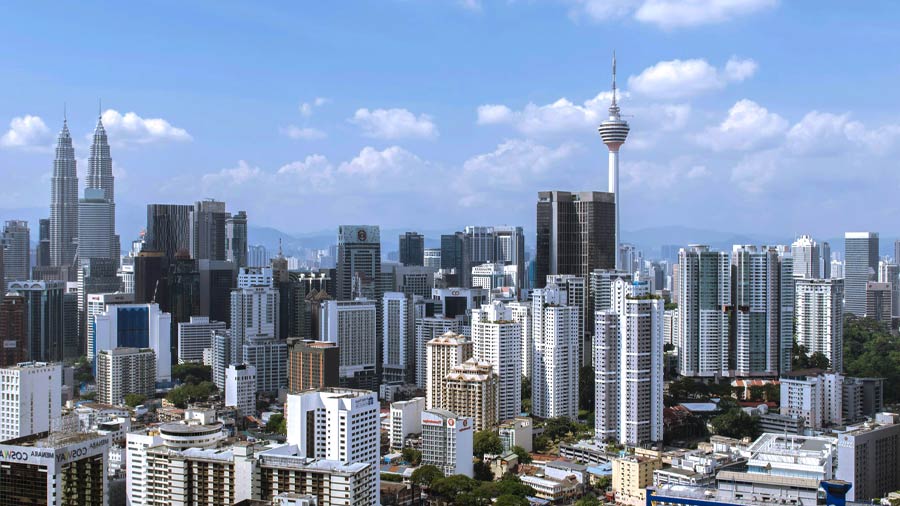


As global supply chains undergo restructuring due to geopolitical tensions, rising labor costs, and the push for diversification, Malaysia's unique position at the heart of ASEAN offers compelling advantages for foreign enterprises seeking to establish or expand their operations.

Malaysia attracted record-breaking approved investments of RM 190.3 billion (US$ 45.1 billion) during the first half of 2025, marking an impressive 18.7 percent year-on-year increase.
Economic and strategic advantages
Strategic geographic position as ASEAN Hub
Malaysia's strategic location in the heart of Southeast Asia positions it as an ideal gateway to a region with over 674 million consumers and a combined GDP exceeding US$ 3 trillion. The country provides direct access to the Malacca Strait—one of the world's busiest maritime routes—making it a natural logistics hub for goods flowing between the Indian and Pacific Oceans.
Greater Kuala Lumpur serves as a central business hub with excellent connectivity to major Asian cities including Tokyo, Seoul, Hong Kong, Beijing, and Shanghai, all within a couple of hours' flight. This proximity enables companies to efficiently manage regional operations while accessing key markets across Asia-Pacific.
Competitive operational costs
Malaysia's cost of doing business remains significantly lower than regional competitors like Singapore while maintaining comparable infrastructure quality. The country offers an attractive cost structure across multiple operational areas:
- Malaysian wages remain competitive compared to developed Asian economies while providing access to skilled professionals. The country ranks 23rd globally in workforce diversity with 67.3 percent of the labor force classified as skilled workers.
- Malaysia's cost of living is approximately 43-52 percent lower than Western countries like the UK and US, making it attractive for expatriate talent relocation. This cost advantage extends to office space, manufacturing facilities, and supporting services.
- Companies benefit from world-class infrastructure at a fraction of the cost found in Singapore or Hong Kong, with extensive transportation networks, modern telecommunications, and reliable utilities.
Stable financial environment
Malaysia's economy demonstrates consistent growth fundamentals that provide businesses with a predictable operating environment. The country achieved a steady GDP growth rate and maintains stable currency performance relative to regional peers.
The Malaysia economy benefits from diversification across manufacturing, services, and technology sectors. In 2024, the digital economy contributed 23.2 percent of GDP and is projected to reach 25.5 percent by 2025. This economic diversity reduces dependency risks and creates multiple growth opportunities for foreign companies.
Foreign direct investment flows demonstrate sustained confidence in Malaysia's economic stability. In 2024, Malaysia recorded RM 6.8 billion (US$ 1.6 billion) in FDI inflows, with Singapore, China, and the United States leading as major investment sources.
Business-friendly government policies
Comprehensive government incentives through MIDA
The Malaysian Investment Development Authority (MIDA) offers extensive government incentives Malaysia designed to attract and support foreign investment across priority sectors. The incentive structure includes:
- Pioneer Status (PS): Provides 70-100 percent income tax exemption for up to five years, extendable in certain cases. This incentive targets businesses in promoted activities including manufacturing, biotechnology, renewable energy, and advanced technology sectors.
- Investment Tax Allowance (ITA): Offers 60-100 percent allowance on qualifying capital expenditure for five years, with unused allowances carried forward until fully utilized.
- Sector-Specific Incentives: Specialized tax holidays are available for industries aligned with national priorities, including:
- Manufacturing: Full tax exemptions for promoted products and activities
- Technology: Enhanced incentives for MSC Malaysia status companies
- Green Energy: Additional benefits for renewable energy projects
- Research and Development: Double deduction for qualifying R&D expenses
Streamlined business setup process
Malaysia has simplified the incorporation process to facilitate faster business establishment. The Companies Commission of Malaysia (SSM) processes complete applications within one working day for standard company registrations.
Extensive free trade agreement network
Malaysia maintains one of Southeast Asia's most comprehensive free trade agreements portfolios, covering approximately 67 percent of the country's total trade.
In 2024, trade with FTA partners generated approximately RM 1.77 trillion (US$ 403.5 billion) in combined imports and exports, demonstrating the substantial commercial benefits of Malaysia's trade agreement network.
Skilled workforce and talent pool
Malaysia's multilingual labor force represents a significant competitive advantage for international companies. The country ranks among the top three in Southeast Asia for English proficiency after Singapore and the Philippines.
Research indicates that 98 percent of Malaysian organizations consider the ability to communicate confidently and effectively in English as critical for graduates. This proficiency extends beyond basic communication to encompass:
- Technical documentation and reporting.
- International client management.
- Cross-border project coordination.
- Professional presentation skills.
The typical Malaysian professional speaks at least two to three languages fluently, with many possessing competencies in Malay, English, Mandarin, Tamil, and various Chinese dialects.
Talent pool
Malaysia produces approximately 200,000 university graduates annually from around 50 higher educational institutions. The education system emphasizes technical skills, engineering, finance, and information technology—disciplines highly sought after by multinational corporations.
Sector-specific expertise:
- Strong foundation in electrical, mechanical, and chemical engineering supporting Malaysia's role as a global manufacturing hub.
- Growing pool of software developers, data scientists, and cybersecurity specialists aligned with the country's digital transformation agenda.
- Well-established expertise in banking, Islamic finance, and fintech innovation.
- Emerging talent base in biotechnology, pharmaceuticals, and medical device development.
Competitive wage structure
Malaysia offers an attractive balance between talent quality and compensation costs. Workforce in Malaysia benefits from competitive wage levels that remain significantly below those found in Singapore, Hong Kong, or major Western markets while exceeding regional averages in countries like Vietnam or Indonesia.
The availability of skilled professionals at competitive wages enables foreign companies to:
- Establish cost-effective regional headquarters operations.
- Build substantial local teams without prohibitive labor costs.
- Access specialized expertise across multiple functional areas.
- Maintain operational flexibility for business expansion.
Research indicates that companies can achieve 20-30 percent salary cost savings compared to Singapore while accessing similar talent quality levels, particularly in technical and professional services roles.
Infrastructure and connectivity
Malaysia's infrastructure development provides foreign companies with reliable, modern facilities supporting complex business operations. The country has invested heavily in transportation, utilities, and commercial facilities that meet international standards.
Transportation networks
- Ports: Port Klang ranks among the world's top container ports, providing excellent cargo handling and logistics capabilities.
- Airports: Kuala Lumpur International Airport (KLIA) serves as a major Asia-Pacific aviation hub with extensive international connectivity.
- Rail and road: Comprehensive networks connecting major economic centers with efficient freight and passenger services.
- Last-mile connectivity: Well-developed urban transportation systems in major business centers.
Advanced digital economy capabilities
Malaysia has positioned itself as a leader in Southeast Asia's digital transformation with substantial investments in telecommunications and technology infrastructure.
Malaysia achieved 82.4 percent 5G coverage in populated areas by December 2024, representing one of the fastest global implementations of next-generation network technology. The rollout supports:
- Enhanced mobile broadband speeds exceeding 100 Mbps.
- Ultra-low latency applications for manufacturing and logistics.
- Massive IoT connectivity for smart city initiatives.
- Advanced edge computing capabilities.
The Jalinan Digital Negara (JENDELA) initiative delivered fiber optic access to over 9.03 million premises nationwide, significantly enhancing digital connectivity for businesses, educational institutions, and government organizations.
Specialized technology zones
Malaysia has developed several world-class technology and business parks that provide companies with comprehensive ecosystems for operations and growth.
|
Feature / location |
Cyberjaya |
KLIA Aeropolis |
Iskandar Malaysia |
|
Primary role |
Malaysia’s designated technology hub |
Comprehensive airport city development |
Special economic region adjacent to Singapore |
|
Key industries / focus |
|
|
|
|
Notable companies / players |
Over 500 Malaysia Digital (formerly MSC) companies including Huawei, Dell, IBM, HSBC, Tech Mahindra, DHL, T-Systems |
Multinational and regional logistics/aerospace players (focused around KLIA ecosystem) |
Global and regional firms leveraging Singapore–Malaysia integration |
|
Infrastructure |
|
|
|
|
Connectivity |
Direct access to Kuala Lumpur and KLIA |
Integrated transport hub (air, rail, road) |
Proximity and connectivity to Singapore, Johor Bahru, and Malaysia’s highway/port systems |
|
Unique value proposition |
Established digital and ICT ecosystem with advanced infrastructure |
Air-linked economic zone designed for trade, logistics, and aerospace |
Dual advantage of Malaysian cost benefits and Singapore’s global business ecosystem |
|
Scale / size |
City-scale tech hub |
25,000-acre airport-driven development |
Regional-scale economic zone |
How to relocate your business to Malaysia
Relocating business operations to Malaysia requires systematic planning and execution across multiple regulatory and operational areas. The relocation process typically involves several parallel workstreams that should be coordinated to ensure efficient setup.
Phase 1: Preliminary planning and assessment (3-6 months)
- Evaluate market opportunities, competitive landscape, and operational requirements specific to your industry and business model
- Identify applicable licenses, permits, and regulatory requirements through MIDA consultation and industry-specific research
- Evaluate potential sites considering factors such as proximity to suppliers/customers, talent availability, infrastructure quality, and government incentive programs
- Determine optimal corporate structure, capitalization levels, and tax planning strategies in consultation with Malaysian tax and legal advisors
Phase 2: Regulatory approvals and business setup (2-4 months)
- Reserve company name, prepare incorporation documents, and submit application with required paid-up capital based on foreign ownership requirements
- Apply for relevant investment incentives and obtain approval letters for tax benefits and operational permissions to MIDA
- Obtain industry-specific licenses from relevant authorities (manufacturing licenses from MIDA, trading licenses from KPDNKK, etc.)
- Open corporate bank accounts, establish credit facilities, and set up international fund transfer mechanisms
Phase 3: Operational establishment (3-6 months)
- Secure office/manufacturing space, install equipment and systems, and ensure compliance with safety and environmental requirements
- Recruit key personnel, establish payroll and benefits systems, and register with EPF, SOCSO, and other statutory bodies
- Identify and qualify local suppliers, establish import/export procedures, and optimize logistics arrangements
- Install IT infrastructure, establish telecommunications systems, and ensure data security and backup capabilities
Professional service providers
When setting up or expanding operations in Malaysia, engaging the right professional service providers can make the difference between a seamless entry and unnecessary complexity.
Companies typically begin by seeking the expertise of Malaysian consulting firms that specialize in foreign investment, corporate law, and regulatory compliance. These firms provide essential guidance on navigating licensing requirements, structuring entities, and ensuring full compliance with local regulations. For cross-border or highly complex transactions, international law firms with Malaysian offices offer the added advantage of global experience combined with local market knowledge. Accounting firms with deep familiarity in Malaysian tax regulations and international transfer pricing rules are also indispensable in ensuring financial structures are both compliant and efficient.
Engaging with specialized advisory firms such as Dezan Shira and Associates provides an additional layer of value: their expertise lies in guiding foreign investors through the nuances of entering new Asian markets, blending legal, tax, and operational support under one roof.
Beyond legal and advisory support, businesses must also consider the practical elements of relocation and facility setup. Professional relocation companies help ease the movement of employees and resources into Malaysia, ensuring that both logistical and cultural transitions are smooth. Facility management firms can then step in to identify suitable office spaces, negotiate leases, and oversee setup requirements. For businesses that prefer to start with a more agile footprint, serviced office providers offer ready-to-use facilities that provide flexibility during the initial establishment phase while permanent infrastructure is being developed.