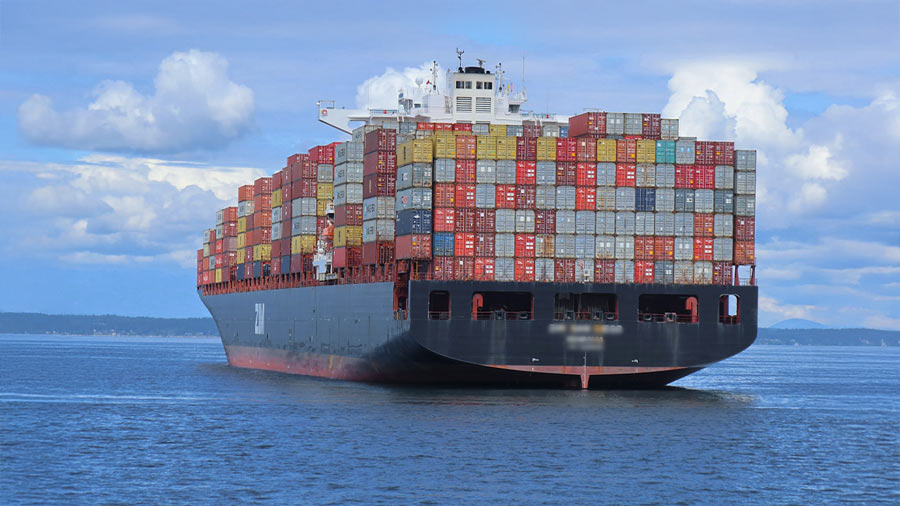

Economic Indicators and Malaysia’s GDP, FDI, and Trade Trends
Malaysia's Gross Domestic Product growth
Malaysia's economy demonstrated remarkable resilience in 2024, expanding by 5.1 percent compared to 3.6 percent in 2023. This robust performance significantly exceeded the government's initial projections of 4.0-5.0 percent, reflecting the effectiveness of targeted economic policies and strong domestic fundamentals. The fourth quarter of 2024 maintained solid momentum with 5.0 percent year-on-year growth, underpinned by sustained private consumption and investment activity.
Looking ahead to 2025, Bank Negara Malaysia has adjusted its GDP forecast to a range of 4.0-4.8 percent, down from the initial projection of 4.5-5.5 percent. This revision reflects growing uncertainties from global trade tensions, particularly following the implementation of reciprocal tariffs by the United States. The International Monetary Fund has similarly revised its 2025 forecast for Malaysia to 4.1 percent, acknowledging the challenging external environment facing export-oriented economies.
The central bank's decision to cut the overnight policy rate by 25 basis points to 2.75 percent in July 2025—the first reduction in five years—signals a proactive approach to supporting economic growth amid heightened global uncertainties.
Structural economic composition
Malaysia's economic structure reflects a well-diversified base, with the services sector dominating at 53.6 percent of GDP in 2024. Manufacturing remained the second-largest contributor at 22.5 percent, while agriculture accounted for 8.2 percent, mining 8.1 percent, and construction 4.0 percent.
The services sector achieved impressive growth of 5.3 percent in 2024, generating record revenue of RM 2.4 trillion (USD 570 billion), representing a 6.3 percent increase from the previous year. This performance was driven by the robust recovery in tourism, with Malaysia welcoming 25 million international tourists, alongside strong domestic travel activity. Key sub-sectors, including wholesale and retail trade grew 4.3 percent, while transportation and storage registered exceptional growth of 10.7 percent.
Manufacturing output expanded by 4.2 percent in 2024, reaching RM 1.9 trillion (USD 451.2 billion) in sales—a 4.6 percent increase from 2023. The electrical and electronics (EandE) industry led this growth, securing RM 55.8 billion (USD 13.2 billion) in investments and representing 46.3 percent of the manufacturing sector's total investment.
Foreign Direct Investment trends
Foreign direct investment into Malaysia surged to a record RM 51.5 billion (USD 12.2 billion) in 2024, marking a substantial 33.4 percent increase from RM 38.6 billion (USD 9.1 billion) in 2023. This exceptional performance elevated Malaysia's cumulative FDI position to RM 995.5 billion (USD 236.4 billion) by year-end, demonstrating sustained investor confidence in the country's economic prospects.
The services sector dominated FDI inflows, attracting RM 39.4 billion (USD 9.3 billion) or 76.5 percent of total investments. Within services, information and communication technologies, along with financial and insurance activities, emerged as primary investment destinations. The manufacturing sector secured RM 9.1 billion (USD 2.1 billion), focused heavily on electrical and electronic products, while mining and quarrying attracted RM 5.3 billion (USD 1.2 billion).
Geographically, Asian economies remained the largest source of FDI, contributing RM 50.3 billion (USD 2.4 billion), with Singapore and Hong Kong leading regional investments. The United States also featured prominently among top investor nations, highlighting Malaysia's appeal to diverse international markets.
The government's strategic focus on high-value, technology-driven investments has proven successful, with Malaysia recording a historic RM 378.5 billion (USD 89.9 billion) in total approved investments—including both foreign and domestic components—generating over 207,000 jobs in 2024.
Malaysia imports and exports statistics
Malaysia's external trade performance in 2024 set new records, with total trade reaching RM 2.879 trillion (USD 683.6 billion), representing a robust 9.2 percent year-on-year increase. This achievement marked the fourth consecutive year of trade values exceeding RM 2 trillion (USD 472 billion), underscoring the economy's strong international integration.
Exports expanded by 5.7 percent to RM 1.508 trillion (USD 357 billion), accounting for 87.2 percent of the target set under the Mid-term Review of the Twelfth Malaysia Plan. This performance was driven by strong demand for electrical and electronic products, particularly semiconductor devices, as well as robust growth in palm oil and palm oil-based agricultural products. Manufacturing exports recovered significantly, supported by the global technology upcycle and increased demand from key markets including the United States and Taiwan.
Imports grew more rapidly at 13.2 percent to RM 1.371 trillion (USD 324 billion), reflecting strong domestic demand and increased investment activity. Despite this robust import growth, Malaysia maintained its impressive trade surplus of RM 136.88 billion (USD 32.4 billion), extending the country's streak of consecutive trade surpluses to 27 years since 1998.
The trade outlook for 2025 remains cautiously optimistic, with exports expected to benefit from continued recovery in global electronics demand and the ongoing technology sector expansion. However, the Ministry of Trade and Industry has highlighted potential risks from escalating trade tensions, particularly the impact of U.S. tariffs on Malaysia's export competitiveness in key sectors.
Services trade has also demonstrated remarkable resilience, with tourism-related exports recovering strongly as international visitor arrivals returned to pre-pandemic levels. The services sector's export performance has been bolstered by Malaysia's strategic position as a regional hub for financial services, logistics, and digital technologies.
Economic outlook
Malaysia's economic fundamentals remain solid despite global headwinds. Inflation has been well-contained at 1.8 percent in 2024, down from 2.5 percent in 2023, supported by government subsidies, a stronger RM, and declining global commodity prices. The labor market has shown resilience with unemployment at 3.2 percent and the creation of 127,000 new private sector jobs.
However, the economic outlook faces several challenges. The implementation of U.S. reciprocal tariffs poses risks to Malaysia's export-oriented sectors, particularly semiconductors and electronics. The potential for a 100 percent tariff on semiconductor imports from companies without U.S. manufacturing presence represents a significant concern given Malaysia's role in the global chip supply chain.
Despite these challenges, Malaysia's diversified economic structure, strong domestic demand, and proactive policy responses position the economy well for continued growth. The government's focus on industrial upgrading through initiatives like the New Industrial Master Plan 2030 and the National Semiconductor Strategy provides a foundation for long-term competitiveness.
The Malaysian economy's resilience in 2024, characterized by broad-based growth across all major sectors, reflects the success of balanced economic policies and structural reforms. As Malaysia navigates the complex global environment in 2025, its strong fundamentals and adaptive policy framework provide confidence in the economy's ability to maintain sustainable growth while managing external risks effectively.
| Malaysia Economic Profile (1990-2020) | ||||
| 1990 | 2000 | 2010 | 2020 | |
| World view | ||||
| Population, total (millions) | 178 | 229 | 286 | 338 |
| Population growth (annual %) | 2.94 | 2.34 | 1.87 | 1.33 |
| Surface area (sq. km) (thousands) | 330800 | 330800 | 330800 | 330241 |
| Population density (people per sq. km of land area) | 54.27840816 | 69.90660782 | 87.21891949 | 103.1488601 |
| GNI, Atlas method (current US$) (billions) | 4.32 | 8.02 | 23.2 | 34.2 |
| GNI per capita, Atlas method (current US$) | 2420 | 3490 | 8130 | 10110 |
| GNI, PPP (current international $) (billions) | 11.8 | 27.5 | 56 | 91.2 |
| GNI per capita, PPP (current international $) | 6590 | 11970 | 19550 | 26920 |
| People | ||||
| Life expectancy at birth, total (years) | 70.952 | 72.732 | 75.376 | 76.057 |
| Fertility rate, total (births per woman) | 3.304 | 2.942 | 2.144 | 1.68 |
| Adolescent fertility rate (births per 1,000 women ages 15-19) | 18.974 | 12.357 | 13.684 | 7.634 |
| Mortality rate, under-5 (per 1,000 live births) | 16.6 | 10 | 8.1 | 8.1 |
| Immunization, measles (% of children ages 12-23 months) | 70 | 96 | 95 | 95 |
| Primary completion rate, total (% of relevant age group) | 91.5 | 100.6 | 98.8 | 94 |
| School enrollment, primary (% gross) | 95.9 | 97.4 | 98.8 | 93.1 |
| School enrollment, secondary (% gross) | 65 | 76.4 | 77.2 | 73.2 |
| School enrollment, primary and secondary (gross), gender parity index (GPI) | 1.02 | 1.03 | 1.03 | 1.03 |
| Prevalence of HIV, total (% of population ages 15-49) | 0.2 | 0.4 | 0.4 | 0.3 |
| Environment | ||||
| Forest area (sq. km) (thousands) | 206185 | 196913.5 | 189476.5 | 191140.4 |
| Terrestrial and marine protected areas (% of total territorial area) | n/a | n/a | n/a | 7.5 |
| Annual freshwater withdrawals, total (% of internal resources) | 1.74 | 0.97 | 1.03 | 1.15 |
| Urban population growth (annual %) | 6.25 | 4.11 | 2.74 | 1.6 |
| Energy use (kg of oil equivalent per capita) | 1188.82453 | 2102.392125 | 2529.591689 | 2722.603166 |
| Total greenhouse gas emissions excluding LULUCF per capita (t CO2e/capita) | 4.808197039 | 6.872943427 | 8.751823716 | 8.523522201 |
| Electric power consumption (kWh per capita) | 1170.122801 | 2774.14274 | 4080.747979 | 4737.978583 |
| Economy | ||||
| GDP (current US$) (billions) | 4.4 | 9.3 | 25.5 | 33.7 |
| GDP growth (annual %) | 9 | 8.8 | 7.4 | -5.4 |
| Inflation, GDP deflator (annual %) | 3.8 | 8.8 | 7.2 | -0.8 |
| Agriculture, forestry, and fishing, value added (% of GDP) | 15.2 | 8.5 | 10 | 8.1 |
| Industry (including construction), value added (% of GDP) | 42.1 | 48.3 | 40.4 | 35.9 |
| Exports of goods and services (% of GDP) | 74.4 | 119.8 | 86.9 | 61.5 |
| Imports of goods and services (% of GDP) | 72.4 | 100.5 | 71 | 55.2 |
| Gross capital formation (% of GDP) | 32.3 | 26.8 | 23.3 | 19.6 |
| Revenue, excluding grants (% of GDP) | n/a | 17.4 | 19.4 | 15.8 |
| Net lending (+) / net borrowing (-) (% of GDP) | n/a | -4.12 | -5 | -6.12 |
| States and markets | ||||
| Tax revenue (% of GDP) | n/a | 13.6 | 13.3 | 10.8 |
| Military expenditure (% of GDP) | 2.5 | 1.6 | 1.4 | 0.9 |
| Mobile cellular subscriptions (per 100 people) | 0.494489541 | 22.2997 | 118.157 | 129.018 |
| Individuals using the Internet (% of population) | n/a | 21.3 | 56.3 | 89.5 |
| High-technology exports (% of manufactured exports) | n/a | n/a | 49.6 | 53.8 |
| Global links | ||||
| Merchandise trade (% of GDP) | 133.3 | 192.1 | 142.4 | 126.1 |
| Net barter terms of trade index (2015 = 100) | 94.6 | 92.1 | 100.3 | 99 |
| Net migration (thousands) | 135020 | 125499 | 157164 | 101907 |
| Personal remittances, received (current US$) (millions) | 185 | 342 | 1102 | 1426 |
| Foreign direct investment, net inflows (BoP, current US$) (millions) | 2332455289 | 3787631579 | 10885801852 | 4058769679 |
| Net official development assistance received (current US$) (millions) | 466 | 48 | -8.1 | -4.2 |