
Economic Indicators and Singapore's GDP, FDI, and Trade Trends
Singapore’s Gross Domestic Product growth
Singapore's economy expanded by 5.0 percent in 2025, up from a preliminary estimate of 4.8 percent and following revised growth of 5.3 percent in 2024. This dramatically outperformed the government's initial forecast, MTI had downgraded its 2025 projection to 0–2 percent in April 2025 amid U.S. tariff escalation, before upgrading it to "around 4.0 percent" in November 2025 as the AI-driven electronics cycle gathered pace. In the fourth quarter of 2025, GDP rose 6.9 percent year-on-year, the strongest quarterly expansion since Q4 2021, with full-year growth driven primarily by manufacturing, wholesale trade, and finance and insurance, and robust AI-related electronics demand providing a key lift.
Momentum has carried into 2026. The economy grew 6.0 percent year-on-year in Q1 2026, and MTI has maintained its 2026 GDP growth forecast at 2.0 to 4.0 percent, although it cautioned that downside risks have risen significantly as a result of the US-Israel-Iran conflict that began in late February 2026. The 2026 forecast had been upgraded in February from "1.0 to 3.0 percent" to "2.0 to 4.0 percent", citing resilience in the global economy and a sustained AI investment boom.
Foreign Direct Investment trends
According to UNCTAD's World Investment Report 2026, Singapore was the world's second-largest FDI recipient in 2025 with US$151 billion in inflows, behind only the United States (US$277 billion) and ahead of Hong Kong (US$116 billion) and China (US$105 billion). Globally, FDI rose 6 percent to US$1.6 trillion in 2025, so Singapore captured roughly 9–10 percent of world inflows.
EDB secured S$14.2 billion in Fixed Asset Investment commitments in 2025, with Total Business Expenditure at S$8.9 billion, FAI was up from S$13.5 billion in 2024, and the commitments are expected to generate about 15,700 jobs and S$18 billion in value added over the next five years. Of the S$14.2 billion, about S$12.1 billion came from manufacturing-related projects, led by semiconductor manufacturers building greenfield plants and expanding facilities to serve AI-related chip and server demand, alongside biomedical capacity expansion and specialty chemicals projects. TBE commitments were led by HQ, professional services, and R&D investments, with tech companies, the largest contributor to HQ investments.
The old "EDB projects FDI could exceed US$200 billion by 2028" line should be reviewed, I couldn't verify it against current EDB communications, and EDB's own metrics are FAI/TBE commitments, not FDI inflows.
Singapore import and export statistics
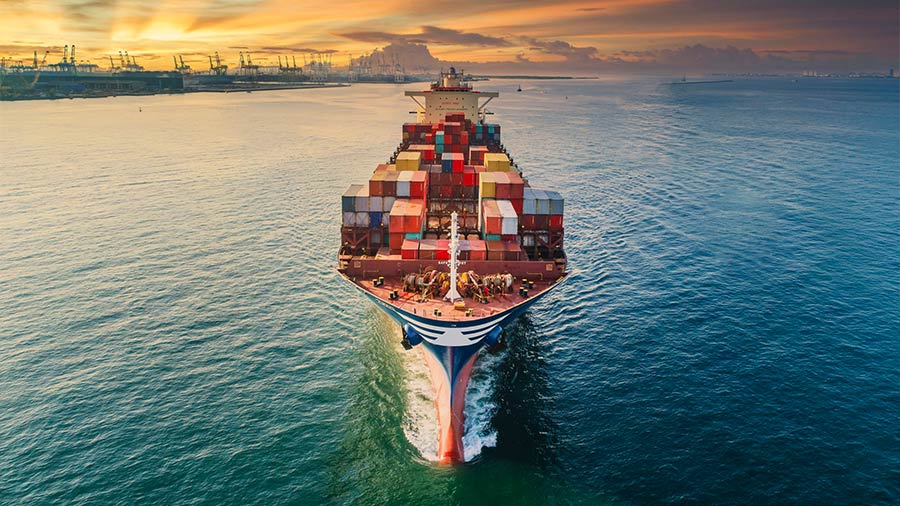
For the whole of 2025, Singapore's total merchandise trade expanded by 8.7 percent to S$1.4 trillion, with non-oil trade expanding 13.2 percent while oil trade contracted 11.7 percent amid lower oil prices. Total services trade grew 3.3 percent to S$1,055 billion. Nominal NODX grew 4.8 percent in 2025 (8.6 percent in real terms), with the global AI boom driving a 13 percent expansion in NODX of integrated circuits, PCs, and specialised machinery, collectively contributing 3.5 percentage points of the overall growth.
2026 so far: NODX expanded 9.6 percent in Q1 2026, following a 12.7 percent increase in Q4 2025, with electronics exports jumping 57.8 percent. The most recent monthly print is extraordinary, NODX expanded 38.4 percent year-on-year in May 2026, extending April's 24.4 percent rise, with electronic NODX surging 94.8 percent on robust AI-related demand, and NODX to Taiwan up 135.2 percent, the US up 80.9 percent, and China up 31.0 percent. Against this backdrop, Enterprise Singapore upgraded its 2026 NODX growth forecast to 3.0–5.0 percent in May, from 2.0–4.0 percent previously, citing robust global AI-related demand and a smaller-than-anticipated tariff impact, its second upgrade of the year, after raising it from 0–2 percent to 2–4 percent in February.
Replace the June 2025 IP/CPI line with current data: CPI in May 2026 rose 1.8 percent from a year earlier, with core inflation at 1.4 percent; MAS and MTI expect both core and headline inflation to average between 1.5 and 2.5 percent in 2026, with risks tilted to the upside due to elevated global energy prices. Worth noting for context: MAS returned to policy tightening in April 2026, its first such move since 2022, to guard against inflationary pressures from the Middle East conflict, and raised its 2026 inflation forecasts to 1.5–2.5 percent from 1–2 percent previously.
| Singapore Economic Profile (1990-2020) | ||||
| 1990 | 2000 | 2010 | 2020 | |
| World view | ||||
| Population, total (millions) | 3.05 | 4.03 | 5.08 | 5.69 |
| Population growth (annual %) | 3.9 | 1.7 | 1.8 | -0.3 |
| Surface area (sq. km) (thousands) | 0.7 | 0.7 | 0.7 | 0.7 |
| Population density (people per sq. km of land area) | 4,548.00 | 6,011.80 | 7,231.80 | 8,019.50 |
| Poverty headcount ratio at national poverty lines (% of population) | .. | .. | .. | .. |
| Poverty headcount ratio at $1.90 a day (2011 PPP) (% of population) | .. | .. | .. | .. |
| GNI, Atlas method (current US$) (billions) | 34.88 | 95.39 | 228.09 | 312.26 |
| GNI per capita, Atlas method (current US$) | 11,450 | 23,680 | 44,930 | 54,920 |
| GNI, PPP (current international $) (billions) | 71.9 | 175.48 | 378.12 | 527.75 |
| GNI per capita, PPP (current international $) | 23,600 | 43,570 | 74,480 | 92,530 |
| People | ||||
| Income share held by lowest 20% | .. | .. | .. | .. |
| Life expectancy at birth, total (years) | 75 | 78 | 82 | 83 |
| Fertility rate, total (births per woman) | 1.8 | 1.6 | 1.2 | 1.1 |
| Adolescent fertility rate (births per 1,000 women ages 15-19) | 8 | 8 | 5 | 3 |
| Contraceptive prevalence, any methods (% of women ages 15-49) | 65 | 62 | .. | .. |
| Births attended by skilled health staff (% of total) | .. | 100 | 100 | 100 |
| Mortality rate, under-5 (per 1,000 live births) | 8 | 4 | 3 | 3 |
| Prevalence of underweight, weight for age (% of children under 5) | .. | 3.3 | .. | .. |
| Immunization, measles (% of children ages 12-23 months) | 84 | 96 | 95 | 95 |
| Primary completion rate, total (% of relevant age group) | .. | .. | .. | 98 |
| School enrollment, primary (% gross) | .. | .. | .. | 100.7 |
| School enrollment, secondary (% gross) | .. | .. | .. | 105 |
| School enrollment, primary and secondary (gross), gender parity index (GPI) | .. | .. | .. | 1 |
| Prevalence of HIV, total (% of population ages 15-49) | 0.1 | 0.1 | 0.2 | 0.2 |
| Environment | ||||
| Forest area (sq. km) (thousands) | 0.1 | 0.2 | 0.2 | 0.2 |
| Terrestrial and marine protected areas (% of total territorial area) | .. | .. | .. | 2.5 |
| Annual freshwater withdrawals, total (% of internal resources) | 223.2 | 338.2 | 160 | 82 |
| Urban population growth (annual %) | 3.9 | 1.7 | 1.8 | -0.3 |
| Energy use (kg of oil equivalent per capita) | 3,783 | 4,635 | 5,007 | .. |
| CO2 emissions (metric tons per capita) | 9.75 | 10.57 | 8.35 | 8.4 |
| Electric power consumption (kWh per capita) | 4,983 | 7,575 | 8,680 | .. |
| Economy | ||||
| GDP (current US$) (billions) | 36.14 | 96.07 | 239.81 | 340 |
| GDP growth (annual %) | 9.8 | 9 | 14.5 | -5.4 |
| Inflation, GDP deflator (annual %) | 4.7 | 3.9 | 1.1 | -2.9 |
| Agriculture, forestry, and fishing, value added (% of GDP) | 0 | 0 | 0 | 0 |
| Industry (including construction), value added (% of GDP) | 31 | 32 | 27 | 24 |
| Exports of goods and services (% of GDP) | 177 | 188 | 198 | 176 |
| Imports of goods and services (% of GDP) | 167 | 176 | 172 | 144 |
| Gross capital formation (% of GDP) | 36 | 35 | 28 | 23 |
| Revenue, excluding grants (% of GDP) | 25.4 | 25.7 | 16.8 | 21 |
| Net lending (+) / net borrowing (-) (% of GDP) | 10.5 | 11 | 7.5 | 7.5 |
| States and markets | ||||
| Time required to start a business (days) | .. | 8 | 3 | 2 |
| Domestic credit provided by financial sector (% of GDP) | .. | .. | .. | .. |
| Tax revenue (% of GDP) | 14.5 | 14.9 | 12.8 | 13.2 |
| Military expenditure (% of GDP) | 4.6 | 4.5 | 3.4 | 3.2 |
| Mobile cellular subscriptions (per 100 people) | 1.7 | 68.2 | 143.9 | 144.1 |
| Individuals using the Internet (% of population) | 0 | 36 | 71 | 75.9 |
| High-technology exports (% of manufactured exports) | .. | .. | 52 | 52 |
| Statistical Capacity Score (Overall Average) (scale 0 - 100) | .. | .. | .. | .. |
| Global links | ||||
| Merchandise trade (% of GDP) | 314 | 283 | 276 | 204 |
| Net barter terms of trade index (2000 = 100) | 116 | 100 | 84 | 83 |
| External debt stocks, total (DOD, current US$) (millions) | .. | .. | .. | .. |
| Total debt service (% of exports of goods, services and primary income) | .. | .. | .. | .. |
| Net migration (thousands) | 298 | 93 | 317 | 135 |
| Personal remittances, received (current US$) (millions) | .. | .. | 0 | 0 |
| Foreign direct investment, net inflows (BoP, current US$) (millions) | 5,575 | 15,515 | 55,322 | 120,439 |
| Net official development assistance received (current US$) (millions) | -1.7 | .. | .. | .. |
| Figures in italics refer to periods other than those specified. | ||||