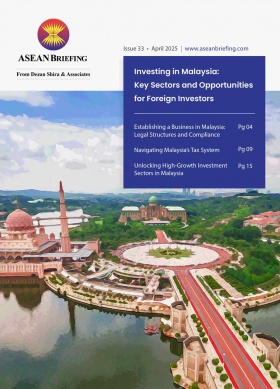
Other Briefings
Fixed-Term vs. Permanent Employment Contracts in Malaysia: Which Is Right for Foreign Firms?
Foreign firms should not assume that fixed-term contracts provide a lower-risk alternative to permanent employment in Malaysia. The appropriate contract depends on whether the role itself is genuinely temporary or forms part of the company’s continuing operations. While Malaysian law recognizes both fixed-term and permanent employment, Malaysian courts look beyond the wording of a contract when determining the true nature of the employment relationship. As a result, a contract intended to provide greater flexibility may instead expose an employer to additional legal and financial liabilities if it no longer reflects the reality of the role.
What determines whether a role should be permanent or fixed-term?
The primary consideration is whether the position is expected to continue after the original business requirement has ended. A role created to meet a genuine temporary business requirement, such as implementing a new enterprise resource planning (ERP) system, replacing an employee on extended leave, or supporting a project with a defined completion date, may justify a fixed-term contract because the need for the role is expected to end. By contrast, where the position is expected to remain as part of the employer’s long-term workforce, a permanent contract more accurately reflects the employment relationship.

A company entering Malaysia may initially engage employees on fixed-term contracts to support a business project expected to conclude within 12 months. If the implementation concludes and the position is no longer required, allowing the contract to expire is generally consistent with the original commercial purpose. If, however, the same individual is retained to oversee the company’s ongoing digital transformation, technology governance, and internal systems after implementation has been completed, the role has evolved beyond its original purpose. Continuing to rely on successive fixed-term contracts in those circumstances may no longer reflect the true nature of the employment relationship.
For most foreign firms establishing a long-term presence in Malaysia, permanent contracts will generally be the more appropriate choice because they provide a contractual framework that reflects an enduring business need. Fixed-term contracts are better reserved for positions linked to a genuine temporary requirement with a clearly identifiable endpoint.
When does a fixed-term contract become a legal risk?
An expiry date does not, by itself, determine whether employment is genuinely temporary. Malaysian Industrial Court decisions examine the substance of the employment relationship rather than relying solely on the contractual label adopted by the employer. This approach was reinforced by the Federal Court in Ahmad Zahri Mirza Abdul Hamid v AIMS Cyberjaya Sdn Bhd, which confirmed that determining whether employment is genuinely fixed-term requires examining the reality of the employment relationship, including the employer’s operational requirements and subsequent conduct, rather than the contractual wording alone.
Returning to the previous example, renewing the ERP manager’s contract because implementation has been delayed may remain consistent with a genuine fixed-term appointment. Renewing the contract after the implementation project has finished because the employee has assumed responsibility for permanent business functions presents a materially different situation.
In those circumstances, the Industrial Court may conclude that the employment relationship has become permanent despite the continued use of fixed-term contracts.
How contract choice affects future employment liabilities
The financial consequences of the contract decision often become apparent only when employment ends. A permanent employee whose employment is terminated may have statutory and contractual rights, including the ability to challenge the dismissal before the Industrial Court where there is no just cause or excuse. A genuine fixed-term contract, by contrast, ordinarily concludes upon the expiry of its agreed term because the temporary business requirement has come to an end.
If the employment relationship is later characterized as permanent, however, the employer’s exposure extends beyond the expiry of the contract itself. Depending on the circumstances, the employer may face claims relating to the termination and, where applicable, statutory termination benefits that would not ordinarily arise following the natural expiry of a genuine fixed-term appointment. The financial implications therefore depend not simply on the wording of the contract but on whether the underlying employment relationship genuinely supports a fixed-term arrangement.
Why foreign employers commonly get this decision wrong
Foreign firms frequently review workforce size as their Malaysian operations expand but pay less attention to whether existing employment contracts still reflect the roles being performed. A position initially created for a temporary project may become an established business function as operational needs evolve. Unless the contractual arrangement is reviewed at the same time, the legal basis for maintaining a fixed-term contract may disappear even though the documentation remains unchanged.
Another common issue is adopting employment contracts used elsewhere within an international corporate group without considering Malaysia’s legal approach to fixed-term employment. Contract structures that operate effectively in another jurisdiction may produce different legal outcomes if the employment relationship is later examined by the Industrial Court.
Build a compliant workforce with Dezan Shira & Associates
Dezan Shira & Associates advises foreign investors on fixed-term and permanent employment arrangements, employment contract drafting, workforce structuring, and HR compliance in Malaysia. Contact our team to discuss the employment strategy that best supports your business objectives.
About Us
ASEAN Briefing is one of five regional publications under the Asia Briefing brand. It is supported by Dezan Shira & Associates, a pan-Asia, multi-disciplinary professional services firm that assists foreign investors throughout Asia, including through offices in Jakarta, Indonesia; Singapore; Hanoi, Ho Chi Minh City, and Da Nang in Vietnam; and Kuala Lumpur in Malaysia. Dezan Shira & Associates also maintains offices or has alliance partners assisting foreign investors in China, Hong Kong SAR, Mongolia, Dubai (UAE), Japan, South Korea, Nepal, The Philippines, Sri Lanka, Thailand, Italy, Germany, Bangladesh, Australia, United States, and United Kingdom and Ireland.
For a complimentary subscription to ASEAN Briefing’s content products, please click here. For support with establishing a business in ASEAN or for assistance in analyzing and entering markets, please contact the firm at asean@dezshira.com or visit our website at www.dezshira.com.