Other Briefings

Indonesia-Singapore Bilateral Investment Guarantee Agreement to Expire
The bilateral agreement signed by Indonesia and Singapore in 2005 will not be renewed by Indonesia, and is set to expire on June 20, 2016. This bilateral agreement, commonly known as an investment guarantee agreement (IGA), grants protection to Singaporean investors.

Indonesia Extends Tax Holiday in Bid to Attract More Foreign Investment
Indonesia has announced plans to extend the validity of the country’s tax holiday from the current 10 years to a maximum of 15 years. The tax holiday applies to investments over IDR 1 trillion (US$76 million), labor-intensive investments, and investments into eastern Indonesia (an economically poorer region). Additionally, the tax holiday will be applied to investments into “pioneer” sectors.

Indonesia Gives Tax Breaks to Exporting Manufacturers
Indonesia has brought in tax breaks for enterprises exporting a minimum of 30 percent of their production, in line with tax breaks for multinationals re-investing profits in-country rather than sending profits and dividends to overseas shareholders.

Indonesia’s Economy Struggles to find its Footing
For the second quarter in a row, Indonesia’s economy contracted as exports and government spending continued to decline – GDP was down 0.18 percent. The country’s currency, the rupiah, also fell.
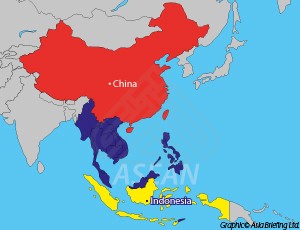
The Cost of Business in Indonesia Compared With China
The second part in our comprehensive look at how doing business in ASEAN compares with China, this time focusing on Indonesia.

USA, New Zealand to Take Indonesia to WTO on Import Restrictions
The US and New Zealand have asked the World Trade Organization (WTO) for a dispute settlement panel to examine Indonesia’s wide-ranging restrictions on horticulture and animal imports.

Indonesia Struggles to Strengthen Weakening Rupiah
Tuesday, March 17th, Indonesia’s central bank, Bank Indonesia, announced that it will hold the country’s key interest rate steady at 7.5 percent. The bank has chosen not to follow the recent regional trend of countries drastically cutting their borrowing costs. Markets have so far met the news positively and the rupiah has strengthened 0.6 percent to 13,165 against the dollar – the largest gain in eight weeks. Indonesia’s government has been struggling to strengthen a rapidly weakening rupiah, the country’s currency. The rupiah is Asia’s worse performing currency against the U.S. dollar this year.

Indonesia Online: A Guide to E-commerce
While currently, e-commerce only accounts for less than one percent (worth ~US$2 billion per year) of Indonesian retail spending, analysts believe that the country’s fast growing middle class and proliferation of smartphones will soon raise that share to eight percent (worth US$8 billion) in just a few years. If that scenario were to happen, then Indonesia’s e-commerce market would be the largest in Southeast Asia.

Indonesia Looks to Foreign Investment to Boost Economy
Indonesia is set to introduce a one stop service for providing ministry licenses, speed up the completion of government tenders by March each year, establish a land bank to fast track infrastructure projects and release a five-year $450 billion infrastructure investment plan.

Letters of Credit Required for Indonesia Commodities Exporters
A Rule from Indonesia’s Trade Ministry requires commodity exporters to use letters of credit (L/C) in overseas shipments from April 1, 2015. The new rule will effect coal, oil and gas, palm and palm-kernel oil, and minerals including tin. According to the Ministry, these commodities together accounted for over 41 percent of Indonesia’s exports from 2009 to 2013, averaging $US71 billion per year.