Other Briefings
An Introduction to Doing Business in Indonesia 2026 – New Publication from Dezan Shira & Associates
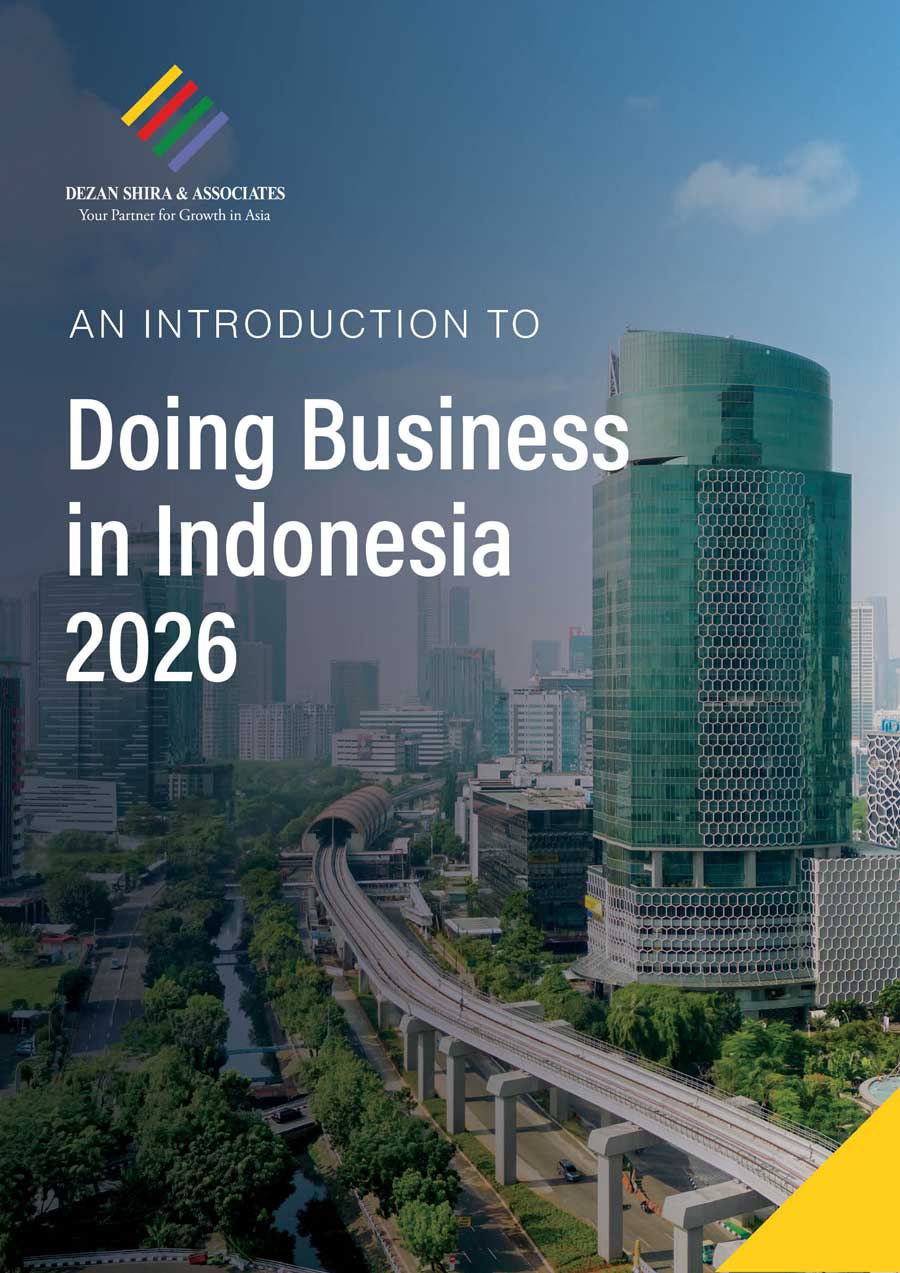
An Introduction to Doing Business in Indonesia 2026, the latest publication from Dezan Shira & Associates, is available for download through the Asia Briefing Publication Store.
Indonesia enters 2026 operating in a more demanding economic environment shaped by global trade realignment and moderating growth, yet its long-term position within Southeast Asia continues to diverge from many of its regional peers. Economic momentum across ASEAN has become more uneven, but Indonesia’s scale and demographic profile increasingly distinguish it from neighboring markets facing structural constraints beyond cyclical slowdown.

Through 2025, Indonesia’s economy expanded at around 4.9–5.0 percent, reflecting external headwinds and softer global demand rather than domestic instability. Foreign direct investment remained substantial at approximately IDR 900.9 trillion (US$53–55 billion), broadly flat compared with 2024, signaling a shift from rapid inflow growth toward more selective, longer-term capital commitments. Domestic investment played a larger role in sustaining overall activity, reinforcing Indonesia’s internal economic base.
Trade conditions highlighted growing exposure to external policy shifts. U.S. tariff actions in 2025 temporarily imposed duties exceeding 30 percent on selected Indonesian exports before subsequent negotiations reduced effective rates. Manufacturing activity reflected this volatility, with the Purchasing Managers’ Index dipping into contraction early in the year before recovering later. The sector did not experience a structural downturn, but growth remained sensitive to external demand and pricing pressure.
Against this backdrop, Indonesia’s long-term comparative advantage within ASEAN has become clearer. While economies such as Thailand, Vietnam, and Singapore face accelerating population aging, shrinking working-age cohorts, or heavy reliance on export manufacturing, Indonesia retains a large and relatively young population approaching 290 million, with domestic consumption accounting for more than half of GDP. This demographic profile provides a longer runway for internal demand-led growth than many regional peers.
This divergence is increasingly shaping regional trade patterns. As China’s manufacturing sector grapples with excess capacity and weaker domestic consumption, Indonesia has emerged as a growing destination for Chinese consumer goods and industrial products. Rather than competing solely as an alternative production base, Indonesia is increasingly positioned as a consumer and distribution market within regional supply chains, reflecting market size and purchasing power rather than wage arbitrage.
Macroeconomic stability through 2025 reinforced this positioning. Growth remained near the 5 percent level, fiscal discipline was maintained, and foreign exchange reserves stayed at comfortable levels. For foreign investors in 2026, Indonesia’s appeal lies less in rapid growth alone and more in structural endurance, combining scale, demographics, and consumption in a region where many peers face tightening long-term constraints.
An Introduction to Doing Business in Indonesia 2026, compiled by Dezan Shira & Associates, provides foreign enterprises and investors with a comprehensive overview of Indonesia’s business landscape.
The guide covers the following:
- Indonesia’s New Positive Investment List
- Corporate establishment
- Taxation
- Human resources and payroll
- Audit and compliance.
About Us
ASEAN Briefing is one of five regional publications under the Asia Briefing brand. It is supported by Dezan Shira & Associates, a pan-Asia, multi-disciplinary professional services firm that assists foreign investors throughout Asia, including through offices in Jakarta, Indonesia; Singapore; Hanoi, Ho Chi Minh City, and Da Nang in Vietnam; and Kuala Lumpur in Malaysia. Dezan Shira & Associates also maintains offices or has alliance partners assisting foreign investors in China, Hong Kong SAR, Mongolia, Dubai (UAE), Japan, South Korea, Nepal, The Philippines, Sri Lanka, Thailand, Italy, Germany, Bangladesh, Australia, United States, and United Kingdom and Ireland.
For a complimentary subscription to ASEAN Briefing’s content products, please click here. For support with establishing a business in ASEAN or for assistance in analyzing and entering markets, please contact the firm at asean@dezshira.com or visit our website at www.dezshira.com.