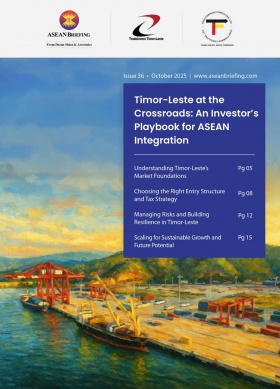
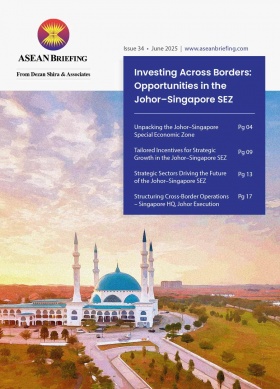
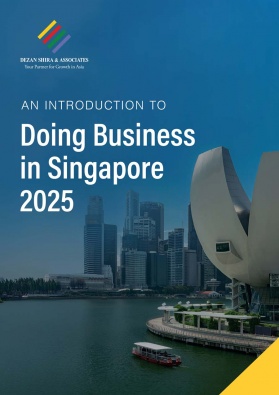
Other Briefings
An Introduction to Doing Business in ASEAN 2026 – New Publication from Dezan Shira & Associates
An Introduction to Doing Business in ASEAN 2026, the latest publication from Dezan Shira & Associates, is available for download through the Asia Briefing Publication Store.
ASEAN enters 2026 amid a period of strategic recalibration. The re-imposition of U.S. reciprocal tariffs under Executive Order 14257 has affected all member economies, with rates generally between 10 and 20 percent, depending on their trade balance with Washington. While the measures have increased export costs and compliance demands, they also indicate the region’s enduring importance in global supply chains — offering firms a credible diversification path beyond sole reliance on China.
Despite these pressures, ASEAN’s fundamentals remain sound. The Asian Development Bank (ADB) projects Southeast Asia’s economy to expand by 4.3 percent in 2026, driven by resilient domestic consumption, infrastructure investment, and a growing services sector. This resilience provides the backdrop for a more strategic adjustment — where governments and businesses alike are shifting focus from short-term expansion to long-term competitiveness and structural reform. With the formal admission of Timor-Leste as ASEAN’s eleventh member in October 2025, the bloc’s footprint now extends farther east, signaling both deeper regional integration and new frontiers for investment in infrastructure, logistics, and energy.
These reforms signal ASEAN’s intent to evolve from a cost-driven manufacturing base into a predictable, compliance-oriented operating environment. For investors, the implication is clear: competitiveness in the region now hinges less on incentives and more on structure, governance, and efficiency.
The region’s ports and bonded-zone facilities are likewise drawing renewed attention as manufacturers reassess where to locate intermediate processing to remain tariff-eligible. Transshipment is increasingly part of that conversation — not as a way around trade barriers, but as an emerging channel for limited value-added processing within ASEAN. Although progress remains uneven, projects such as digital certificates of origin, Singapore’s blockchain pilot, and customs-modernization programs in Vietnam and Malaysia point to measurable improvements in trade facilitation and documentation standards.
This publication, compiled by experts at Dezan Shira & Associates, introduces the fundamentals of investing in ASEAN and provides valuable insights on navigating this dynamic market. Our practice specializes in foreign direct investment services, including corporate establishment, business intelligence, tax advisory, compliance, accounting, and financial review services for multinationals investing in emerging Asia.
An Introduction to Doing Business in ASEAN 2026 covers the following:
- Corporate establishment;
- Tax and accounting;
- Human resources and payroll; and
- Audit and compliance.
About Us
ASEAN Briefing is one of five regional publications under the Asia Briefing brand. It is supported by Dezan Shira & Associates, a pan-Asia, multi-disciplinary professional services firm that assists foreign investors throughout Asia, including through offices in Jakarta, Indonesia; Singapore; Hanoi, Ho Chi Minh City, and Da Nang in Vietnam; and Kuala Lumpur in Malaysia. Dezan Shira & Associates also maintains offices or has alliance partners assisting foreign investors in China, Hong Kong SAR, Mongolia, Dubai (UAE), Japan, South Korea, Nepal, The Philippines, Sri Lanka, Thailand, Italy, Germany, Bangladesh, Australia, United States, and United Kingdom and Ireland.
For a complimentary subscription to ASEAN Briefing’s content products, please click here. For support with establishing a business in ASEAN or for assistance in analyzing and entering markets, please contact the firm at asean@dezshira.com or visit our website at www.dezshira.com.